
Contents
(Top)
Background and composition
Recording and production
Release and promotion
Critical reception
Track listing
Personnel
References
THE GRAND REDUX (Punch Buggy Album)
Article
From Wikipedia, the free encyclopedia
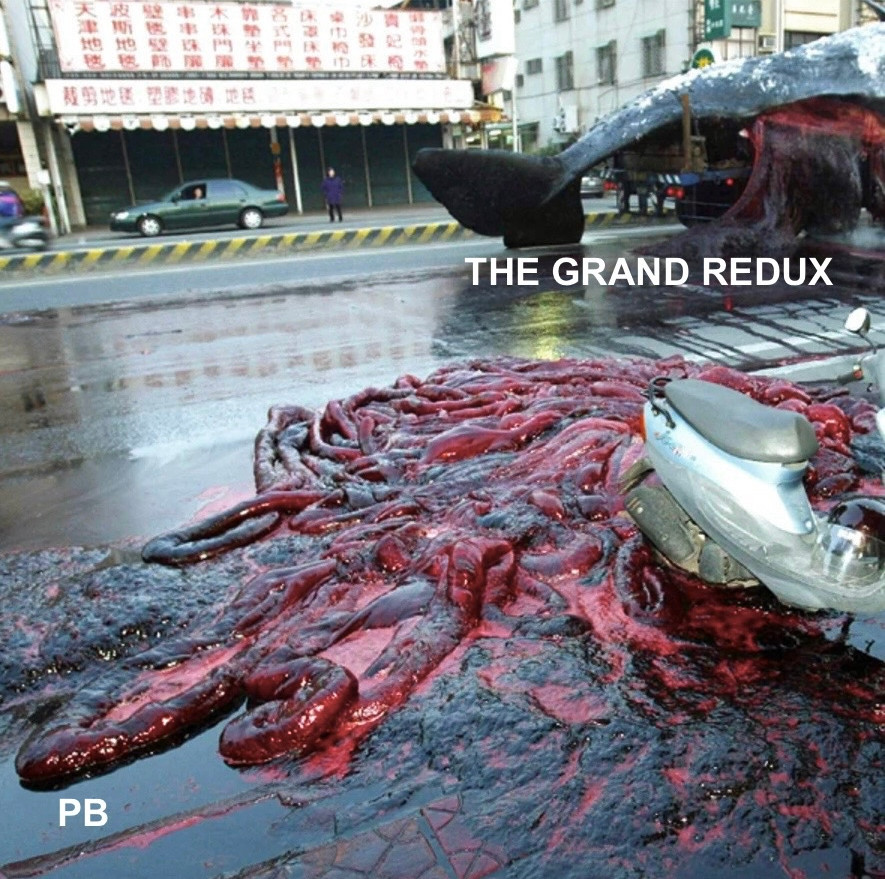
THE GRAND REDUX is the fourth studio album by American rock band Punch Buggy, released independently on 7 September 2026. Recorded primarily over three days at the band's Blue Ghost Basement studio in the Delaware Valley, the album expands the group's production approach through extensive use of sampling, collage, and self-editing. In addition to manipulating existing recordings, the band sampled their own rehearsals and improvised performances, blurring the distinction between live performance and studio composition. The album was preceded by the singles "PUSH", "EGO", and the hidden track "ALREADY KNOW 2", which was made available through a temporary online link.
Lyrically, THE GRAND REDUX combines autobiographical writing with surreal imagery to explore economic precarity, addiction, grief, spiritual renewal, artistic perseverance, and memory through a sequence of songs connected by a narrative arc that loosely resembles the stages of grief. Although each composition stands independently, recurring imagery—including American decline, nature, blood, and collective memory—forms a loose conceptual framework across the album.
Background and composition
Much of THE GRAND REDUX is written from a first-person perspective, moving fluidly between documentary realism and symbolic language. Rather than presenting a linear narrative, the album revisits recurring ideas and imagery across multiple songs, allowing thematic connections to emerge through repetition and contrast.
Across its tracklist, the album’s lyrical and structural approach is shaped by repetition and variation, with motifs reappearing in altered forms rather than developing linearly. This compositional strategy mirrors the album’s use of sampling, reinforcing a thematic link between memory, fragmentation, and reconstruction.
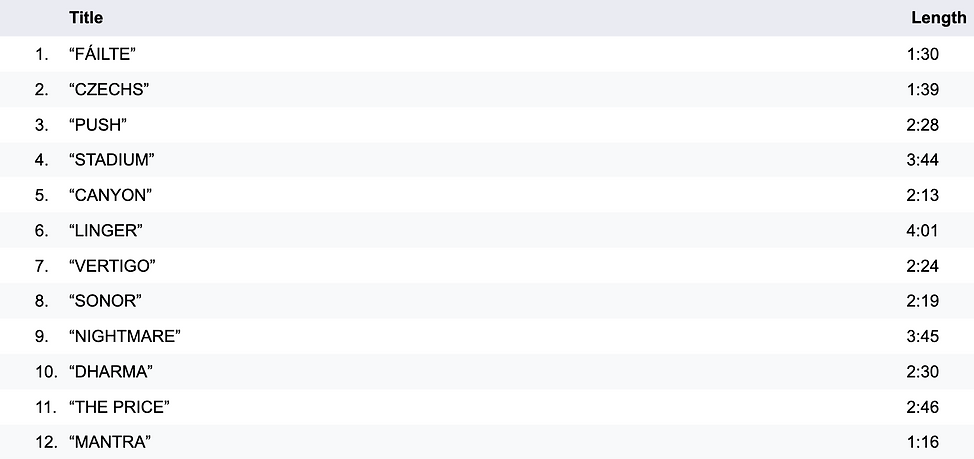
The opening track, "FÁILTE", establishes a world marked by rising rents, social fragmentation, political anxiety, and everyday absurdity. Images of traffic, climate change, exploitative housing markets, and public unrest are contrasted with recurring references to "blood and gore", a phrase that recurs throughout the album as both literal violence and emotional exhaustion. Elsewhere, in songs like “PUSH” and “CANYON”, rural imagery—including cattle, mud, canyons, and open landscapes—is juxtaposed with urban life, digital culture, and fantasies of commercial success, emphasizing tensions between hustle culture and authenticity.
Several songs examine the relationship between artistic ambition and personal vulnerability. "STADIUM" explores the contradictions of commercial success, balancing references to major-label recognition against repeated declarations of independence, while "NIGHTMARE" depicts the psychological cost of pursuing creative work amid financial instability before resolving with the refrain "Still determined, never defeated."
The latter half of the album increasingly adopts spiritual language. Inspired by the death of songwriter Greg Stanard's grandfather following a battle with lung cancer, "SONOR" frames grief through imagery of autopsies, angel wings, and collective memory before concluding that love persists beyond physical absence. "DHARMA" shifts toward recovery and reconciliation, documenting substance misuse, grief, and emotional isolation while revolving around the refrain "Finding a way to stay in love", which suggests a gradual return to presence, joy, and engagement with everyday life following a prolonged period of depression. The closing track, "MANTRA", ends the album with the repeated line "Too late to shy away", reframing perseverance as an act of commitment rather than endurance alone.
Transformation functions as a recurring metaphor throughout the record. References to shape-shifting, butterflies, morphing identities, changing languages, and evolving technologies portray identity as something continually reconstructed through hardship rather than something fixed. Death likewise appears not as an endpoint but as a transformation of presence. "SONOR" and "THE PRICE" examine grief through memories of friends, collaborators, and family members, juxtaposing reflections on addiction and self-destructive behavior with expressions of unconditional acceptance. Religious imagery—including scripture, Babylon, vessels, beacons, dharma, and angel wings—is employed symbolically rather than doctrinally, presenting faith primarily as a practice of compassion, artistic creation, and perseverance.
Recording and production
THE GRAND REDUX was recorded at Blue Ghost Basement, the recording studio built by Punch Buggy in the Delaware Valley. The studio takes its name from Blue Ghost Collective, an unrealized arts collective conceived by the band's members while attending high school and first performing together in Wilmington, Delaware. Principal tracking was completed in fewer than three days, while overdubs continued remotely over the following months. Although the core performances were recorded at Blue Ghost Basement, much of the album's additional material was completed wherever space was available. Stanard recorded the majority of his lead vocals alone in an unused law firm conference room on weekends, while other overdubs were completed remotely from the members' home studios.
The sessions marked Punch Buggy's first extensive use of sampling as a compositional tool. Existing records, field recordings, producer tags, and excerpts from the band's own rehearsals were treated equally as source material, with improvised performances frequently chopped, rearranged, and layered into finished songs. Rather than documenting live performances, the band approached recording as an editing process, constructing arrangements from fragments of spontaneous performances and blurring the distinction between live performance and studio composition.
“FÁILTE” starts the album by exploring themes of urban alienation and persistent frustration within modern life while introducing the album's sample-based aesthetic. Combining new compositions with a collage of sounds from experimental Japanese band OOIOO and Radiohead B-sides, the track sets a precedent for the album’s use of fragmented source material as a means of constructing narrative and mood.
“CZECHS” recalls Stanard’s earliest experiences playing music with friends in Wilmington through a collage-like arrangement of archival recordings and self-sampled material. The track incorporates samples of the introduction to Link Wray's 1974 live performance of "Rumble" and a heavily edited clip of the phrase "Vegas baby" from a YouTube bootleg of Stanard's first band, Rusty Blue, performing at Arden Gild Hall in 2018. Self-sampling also forms the structural basis of "STADIUM", which was assembled from edited excerpts of an early rehearsal before being expanded through overdubs.
"PUSH" originated as a collaboration between Greg Stanard and Tahj Keeton, written and produced at the now-closed Nana's House studio in Los Angeles. After gifting the song to Punch Buggy, many of Keeton's lyrics and melodies survived, though Stanard later rewrote portions of the vocal and composed the chorus.
Longtime collaborator Joey Heins contributed shared lead vocals on "VERTIGO" and arranged and performed the cello parts on "SONOR".
"NIGHTMARE" combines programmed drums by Stanard, heavily processed sampled percussion, and live drumming by Patrick Berl, reflecting the album's broader emphasis on integrating electronic manipulation with live performance.
In contrast to the album's densely edited production, the closing track "MANTRA" consists entirely of an unaltered iPhone voice memo recording.
Release and promotion
The album was released independently on 7 September 2026, coinciding with Labor Day, following the release of singles “PUSH” and “EGO” exclusively through the band’s website, as well as non-album single "ALREADY KNOW 2" which was released via a time-limited link, emphasizing non-traditional distribution methods.
Critical reception
(no content yet / omitted)
Track listing
THE GRAND REDUX
Released
Studios
Studio album by Punch Buggy
7 September 2026
Blue Ghost Basement, Hockessin, DE, Nona's House, Los Angeles, CA
Genres
Future rock • art rock • psychedelic pop • post-punk • alternative/indie
Length
Label
31:43
Blue Ghost Records
Punch Buggy chronology
Punch Buggy 3
(2023)
THE GRAND REDUX
(2023)
Singles from THE GRAND REDUX
1. "PUSH"
Released: 17 August 2026
2. "ALREADY KNOW 2"
Released: 24 August 2026
3. "EGO"
Released: 31 August 2026


Read
Personnel
Punch Buggy
-
Greg Stanard – lead vocals, guitar, bass, synthesizers (), drum programming (), production, songwriting
-
Patrick Berl – drums, drum programming (), synthesizers (), composition
Additional performers
-
Tahj Keeton – original composition and production (3)
-
Joey Heins – lead vocals (10), cello and string arrangement (6)